Personal practice · Journal
How to write a personal meditation prompt
Start with your moment, add an intention, and say how you would like to be guided. You don’t need a perfect prompt.
Give it a useful starting point
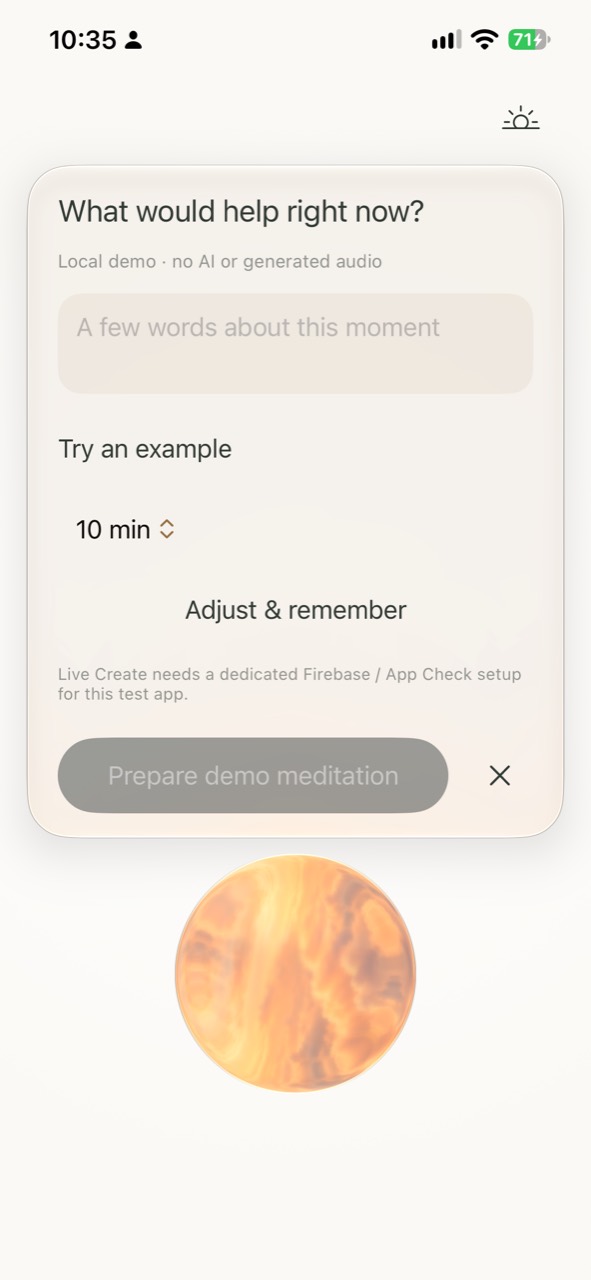
A personal meditation prompt is a short description of what you want this session to hold. It can describe an everyday situation, a quality you want to explore, or a preference for the guidance. There is no special vocabulary to learn. A clear, ordinary sentence is often a better starting point than a long list of instructions.
Try three small ingredients
First, name the moment: “I’m home from work and still thinking about tomorrow.” Then add an intention: “I’d like to settle into my evening.” Finally, include a preference if you have one: “Gentle guidance, without much talking.” These are useful ingredients, not mandatory fields.
An example you can adapt
“I’m between tasks and feel scattered. I’d like a short pause to notice where I am, with my eyes open and simple guidance.” This example describes a situation and a preference without asking the meditation to guarantee a result. In Arrive, choose the session duration separately: 1, 5, 10 or 15 minutes.
Say what would feel useful today
Specific preferences can make your request easier to interpret. For example, “focus on sensations in my hands rather than my breathing” says more than “make it relaxing.” You can also ask for fewer words, a slower pace, or a different emphasis. Generated guidance can still make mistakes; you can stop or choose another practice if it doesn’t suit you.
Keep private details out of the prompt
You don’t need to include names, addresses, employer details or a full personal history to describe a moment. “A difficult conversation is on my mind” gives context without identifying anyone. Share only what you are comfortable having processed to create the session.
A moment can become a direction
Some prompts are for today only. Others point toward something you would like to practise over time. “I’d like to become gentler when I get distracted” could be a direction for a personal path. You can return to that intention and bring a fresh request to the next session. There’s no need to make every meditation a new challenge.
Make a little room for you.
A personal moment. A practice to return to.